A defining moment for our city: insights from the Bristol Initiative Summer Members’ Evening
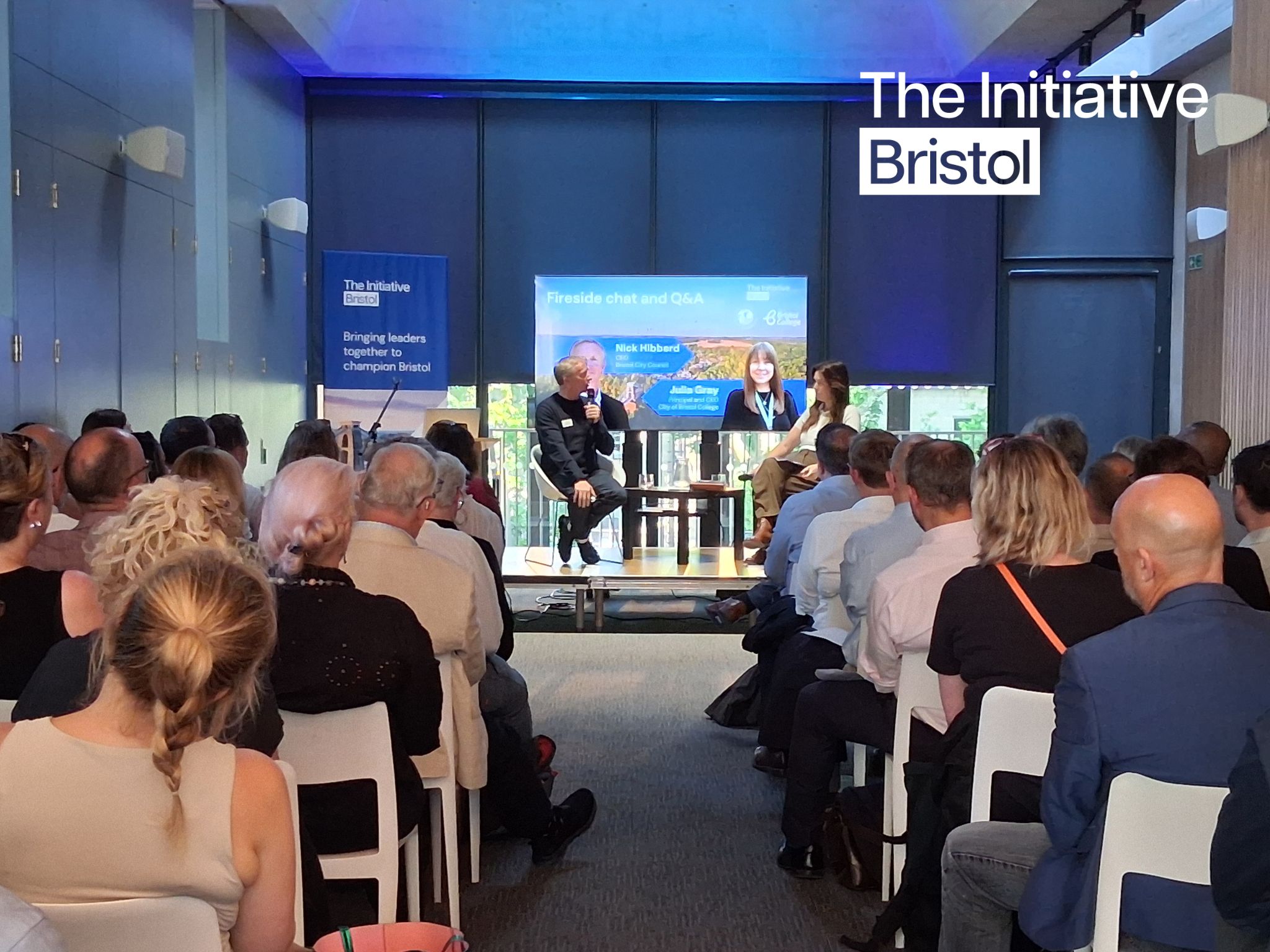
A roundup of key highlights from the Bristol Initiative's Summer QME, including the exclusive fireside chat with Nick Hibberd, CEO of Bristol City Council.

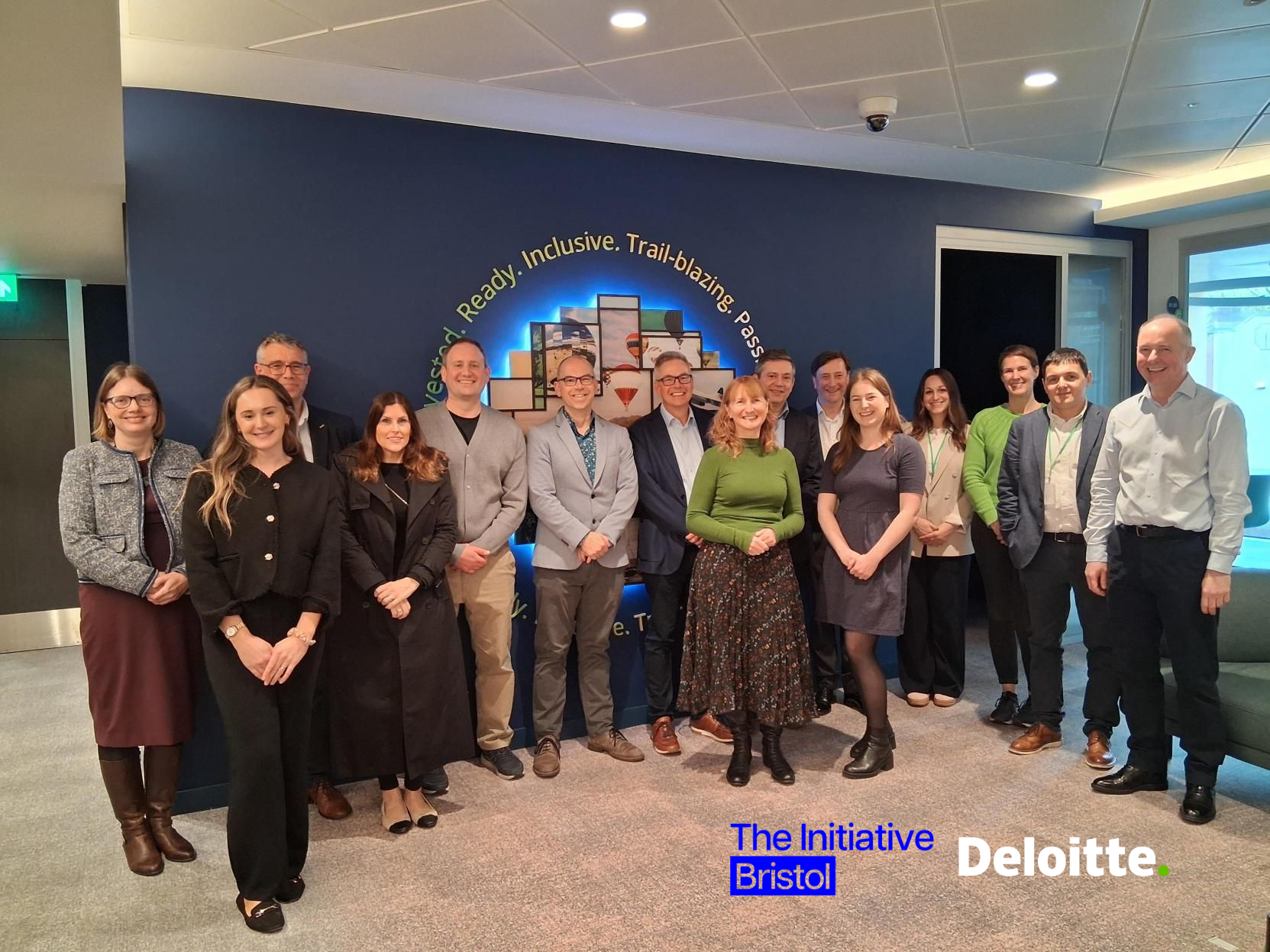
At our recent Bristol Initiative roundtable, delivered in partnership with Deloitte, a diverse group of business leaders convened to explore a critical tension in the modern economy: how do you deploy AI in a way that supports your organisation and delivers real benefits for both your team and the business as a whole?
Last year we brought together members to discuss if leadership capacity was a barrier to economic growth. At that roundtable, technology was identified as both help and hindrance.
Now, led by Dave Tansley, Practice Senior Partner for the South West and Wales and joined by Ed Roddis, Director of Government & Public Services Research for Deloitte, the discussion centred around the fundamental responsibilities of leadership in an era of rapid, often chaotic, technological change.
Prior to the session, Deloitte had conducted research with over 100 senior leaders on how they are using AI in their organisations. One key takeaway shared from their research that resonated with our members was that there is no coherent vision for AI’s future. While people could readily point to AI’s use for handling admin in the short term, few could confidently articulate how AI would be used in five years.
This uncertainty is compounded by what was described as "incredible chaos" in the rollout of AI. Leaders are struggling to get an intellectual grip on a landscape where:
If one thing was clear amongst the uncertainty, it was the importance of leadership to steer and define the AI era.
Surprisingly, the technical aspects of AI implementation weren’t the focus of our leaders. It was managing the profound change to the organisation’s operating model which was causing the most concern.
Managing staff who are mistrustful of AI, ensuring proper governance and security guardrails, communicating transparently, and taking accountability — these are the challenges sat at the top of attendees’ priority lists.
How your teams respond to the change of AI adoption comes down to culture. Are your teams empowered to experiment without fear of putting themselves out of a job? Implementation must be handled with maturity and leaders need to actively listen to their staff on how AI could be used to help.
Another important step is being vocal and honest about AI usage, encouraging staff to share their own shortcuts and workflow improvements.
One attendee described how their entire senior leadership team had attended an intensive AI training week. Following this, their organisation created an AI Academy that is accessible to all their employees.
Demonstrating leadership’s commitment to AI, as well as effective and ethical usage, goes a long way to encouraging a positive culture around AI.
During the discussion, Dave posited a provocative question: if given the choice today, would you hire a person or procure an AI license?
While some leaned toward AI to remove the burden of administrative tasks, the majority argued that human talent was the more important investment. In a world where AI can produce a competent-looking marketing plan or legal summary in seconds, differentiation is shifting back to human relationships and "the magic" of experience-based judgment.
The group were quick to concede that AI can have its place, but the nuance was likened to knowing which golf club you need for each specific shot.
Don't give up on humans, continue to invest in your people. That will always be a 'no regrets' choice.
With such a broad spectrum of industries and professions represented at the roundtable, everybody was approaching AI slightly differently. As a result, we heard a range of practical advice for leaders at every stage of the AI journey:
Leaders should relentlessly focus on the specific problem they are trying to solve as opposed to creating problems for AI to solve. Is the problem you’re trying to solve simply not having AI?
If you are implementing AI, make sure your teams know what tools they should be using, and how to use them. The last thing your security teams want to hear is how somebody has input sensitive client or company information into their own personal ChatGPT account.
It’s not enough to just give people AI licences, they need dedicated time allotted to exploring how the tools work and where they can improve their own workflows in a secure environment.
AI is just a tool to be used, like the mobile phone or Excel spreadsheets. Double checking, understanding output and having accountability doesn’t change because AI had a hand in it.
Collaborate rather than dictate. Speak with your teams to best understand where AI works and where it doesn’t. Open dialogue is key to a positive AI culture.
At the heart of the discussion was a concern for the next generation. Everyone around the table shared the belief that leadership’s greatest challenge today is to ensure young talent thrives. If AI strips away entry-level roles and tasks, what it’s doing is removing “training grounds” for expertise. Members highlighted the moral obligation to find new ways to equip young talent with the skills they need to thrive.
Dave concluded the roundtable with a final plea to "not give up on humans". Investing in people is a "no regrets" choice and prioritising human wisdom and leadership is the only certain path to long-term success.
If you’re not a member but would like to find out more about the Bristol Initiative, then get in touch with Jenny Ablett, Bristol Initiative Acting Director.
A roundup of key highlights from the Bristol Initiative's Summer QME, including the exclusive fireside chat with Nick Hibberd, CEO of Bristol City Council.
Occasionally we like to shine the spotlight on our members, and in this case one of the members of the Bristol Initiative. We sat down with Andrew Allan-Jones, Bristol Location Head and Intellectual Property Partner, DAC Beachcroft.
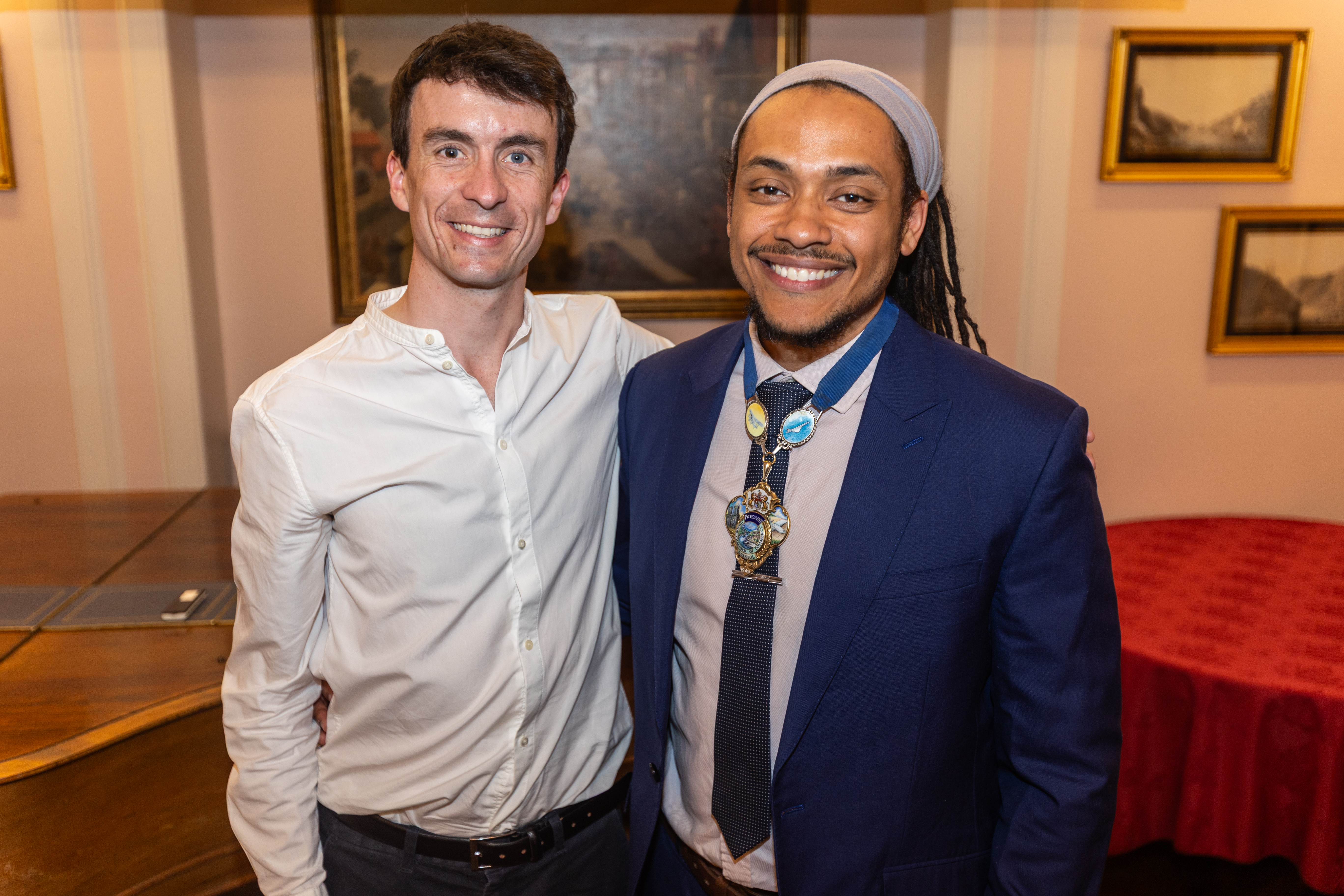
The Bristol Junior Chamber (BJC) enters a new chapter as Connor Jones hands over the Presidency to Jyles Allen. Reflecting on a year of growth and looking forward to the year ahead, we caught up with both leaders to mark this moment of transition and ambition for BJC.